630-584-4800

-

- Home
- Our Firm
- Divorce
- The Illinois Divorce Process
- Grounds for Divorce
- Alimony / Maintenance
- Child Custody / Parental Responsibilities
- Parenting Time
- Child Support
- The Stay at Home Parent and Divorce
- Property Division
- High Asset Divorce
- Tax Implications of Divorce
- Divorce for Older Couples
- Uncontested Divorce
- High Conflict Divorce
- Change in Venue or Jurisdiction
- Subpoenas
- Annulments
- Post Divorce Modifications
- Post Divorce Enforcement and Contempt of Court
- Workers Compensation Claims and Personal Injury Claims in Divorce Cases
- Family Law
- Criminal Defense
- Blog
- Media
- Contact

What Happens at a Hearing For an Order of Protection?
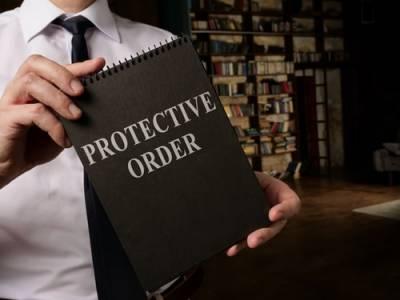
Domestic violence victims in Illinois have the option to get an order of protection to protect themselves, their children, and their property. A protection order is often the first step in leaving an abusive marriage or relationship. Protection orders can also provide legal protection if the abuse is at the hands of an ex-romantic partner, current or former household member, or family member. Unfortunately, many domestic violence victims are unaware of their rights and options under Illinois law. This leads them to suffer in silence and without the legal protection they need.
At Goostree Law Group, our DuPage County, IL family law attorneys can be your fiercest advocate at a protective order hearing. We have decades of legal experience, endowing us with the confidence and legal knowledge to represent you in court. Always keep in mind that some people may react erratically to being served with a protective order. If you are in immediate danger of domestic violence, go to a safe place like a domestic violence shelter or the home of a trusted friend or relative and call 911.
Emergency Protection Orders May Be "Ex Parte" Orders
The first step in seeking legal protection against an abusive or harassing individual is an Emergency Order of Protection (EOP). In Illinois, EOPs are offered on an "ex parte" basis, which means that the respondent (the subject of the order) does not need to be present. You can get an EOP from the court based solely on your testimony. The abuser’s presence is not required. Often, domestic violence victims are able to get an EOP on the same day on which they requested it.
Protection Order Hearings and Plenary Orders of Protection in Illinois
When someone gets an EOP, the court enters a hearing date for a longer-lasting protection order called a Plenary Order of Protection. This hearing is more traditional, and both parties are expected to show up to the hearing. The judge will give the abuse victim and the abuser the chance to make their case. Often, the parties’ attorneys speak on their behalf during the hearing.
Each side will be given the opportunity to provide testimony, call witnesses to the stand, and submit evidence to the court for consideration. After the hearing, the judge makes a decision. He or she will either grant the Plenary Order of Protection or deny the request based on the testimony and evidence presented.
Facing an abuser in court can be intimidating. However, it is important for the party requesting the protection order to be present at the hearing. If only one party shows up, the judge will likely rule in favor of the party who was present. So, if an abuse victim is at the hearing but the respondent does not show, the judge will likely grant the request for protection. However, if the respondent shows up but the person requesting protection fails to make it, the judge will likely deny the request for the protection order.
What Is the Burden of Proof in a Protective Order Hearing?
At a plenary order of protection hearing, you do not have to prove abuse beyond a reasonable doubt like you would in a criminal case. In a civil order of protection case, the burden of proof is usually lower. The judge must decide whether it is more likely than not that abuse happened and that protection is needed. This standard of proof is referred to as "a preponderance of the evidence."
Though the standard of proof is lower, you still need to come prepared with a strong case to ask for a plenary order. Our attorneys can help you document and compile evidence of abuse, such as photos of your injuries or threats made over text or voicemail.
What Protections Can You Get in a Plenary Order of Protection in 2026?
A plenary order of protection can do much more than tell an abuser to stop contacting you. The judge can order protections based on your safety needs and family situation. Illinois law allows the court to give several remedies, including barring abuse, keeping the abuser away from you, granting exclusive possession of a shared home, protecting children, and limiting contact through phone, text, email, social media, or third parties (750 ILCS 60/214).
A plenary order may also address parenting time, child exchanges, pets, firearms, personal property, and access to your workplace, school, or home. The judge can order the abuser to stay a certain distance away from you and other protected people. The order may also protect your children, relatives, roommates, or caregivers if they are included.
You should ask for the protections that match your current circumstances. For example, if the abuser keeps showing up at your job, the order should address your workplace. If the abuser uses a child exchange to threaten you, the order should address exchanges.
How Long Does a Plenary Order of Protection Last?
A plenary order of protection can last up to two years in many Illinois cases. The exact length depends on what the judge orders. The order should state when it starts and when it ends.
Before the order expires, you may be able to ask the court to extend it. You should not wait until the last minute. If the danger is still present, or if the abuser has ignored boundaries, threatened you, stalked you, or made you fear future harm, tell the court. You do not have to wait for another serious injury before seeking continued protection.
What Happens if My Abuser Violates a Plenary Order of Protection?
A plenary order of protection is a court order. The abuser does not get to decide whether to follow it. If the order says no contact, even a "small" text message can be a violation. If the order says stay away from your home, showing up outside may be a violation.
If you are in immediate danger, call 911. Save proof of the violation when you can do so safely. Keep texts, screenshots, call logs, voicemails, photos, and witness names. You may also report the violation to police or return to court. Violating an order of protection can lead to arrest, criminal charges, contempt of court, or other penalties. Your safety should always come first.
Contact a DuPage County, IL Order of Protection Lawyer
If you were the victim of abuse, threats, harassment, or stalking, consider getting an order of protection. You do not have to face this situation alone. Contact our skilled, compassionate Wheaton, IL family law attorneys for help. Call Goostree Law Group at 630-584-4800 for a free, confidential consultation.

Schedule a Consultation Today
Complete the contact form below or call us at 630-584-4800 today.
Free Consultations
630-584-4800
555 S. Randall Road, Suite 200
St. Charles, IL 60174
Follow Us